
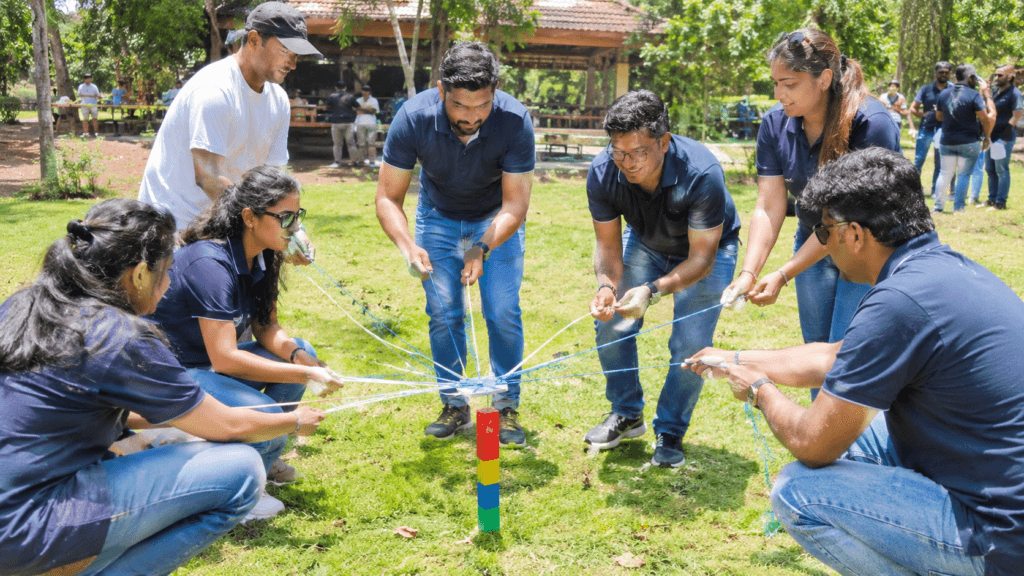
Planning a corporate outing planning checklist Pune involves more than choosing a resort and arranging lunch. HR teams, office administrators and event coordinators also need to consider employee preferences, travel time, group activities, venue facilities, budgets and the overall event schedule.
For companies in Hinjewadi, Baner, Kharadi, Magarpatta, Wakad and other Pune business hubs, a well-planned outing can provide an opportunity for colleagues to interact outside their usual work environment.
However, an outing becomes more meaningful when employees have opportunities to collaborate, solve problems and participate in shared experiences.
This guide explains how to plan a corporate team outing near Pune, choose suitable activities, organize the day and avoid common event-planning mistakes.
What Should You Include in a Corporate Outing Plan?
A successful corporate outing plan should cover six essentials: a clear objective, a suitable venue, travel arrangements, structured team activities, meals and breaks, and a realistic schedule. Organizers should also establish a budget, accessibility requirements, safety arrangements and a backup plan for unexpected changes.
The goal is to create an experience that works for the entire group rather than simply filling the day with entertainment.
1. Define the Purpose of Your Corporate Team Outing
Before searching for venues, decide what your company wants to achieve.
Different objectives call for different event formats.
Employee bonding
Choose activities that encourage colleagues to interact across departments and build relationships beyond their usual project teams.
Communication and collaboration
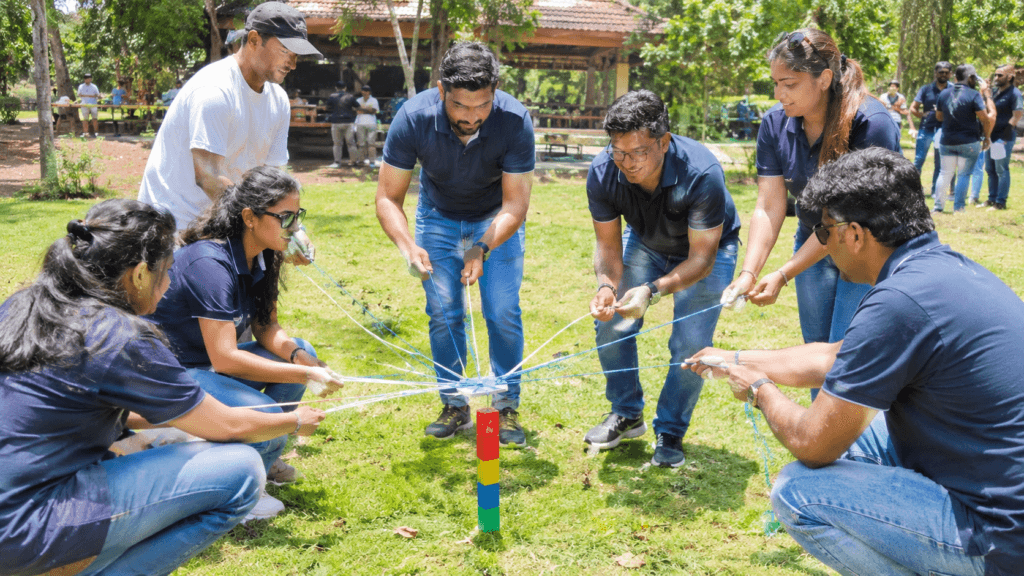
Use challenges where participants need to exchange information, listen to different viewpoints and work towards a shared result.
Employee appreciation
Combine relaxed group experiences with enjoyable activities that recognize employees’ contributions and give colleagues time to connect.
Leadership and problem-solving
Consider facilitated challenges that involve planning, delegation, resource allocation and decision-making.
New employee integration
Choose inclusive icebreakers and collaborative games that help new employees feel comfortable with the wider team.
Defining the objective first makes it easier to shortlist activities and evaluate whether the outing delivered value.
2. Choose a Suitable Corporate Outing Venue Near Pune
Pune has several types of settings for company outings, including resorts, farm-based venues, outdoor activity spaces, conference facilities and indoor entertainment venues. The right choice depends on your group size, travel requirements, event duration and preferred activities.
Here are four formats to consider.
Resort-based day outings
A resort can work well when the group wants a combination of meals, recreation and organized team activities in one location. Confirm the availability of activity space, seating, washrooms, meal arrangements and covered areas before booking.
Nature and agro-tourism venues
Farm-based settings may suit teams looking for a change from the office environment. Check which activities are genuinely available, what facilities are provided and whether the venue can accommodate your group comfortably.
Indoor event spaces
Conference rooms, banquet spaces and indoor activity venues can be suitable for puzzle challenges, communication games, workshops and technology-based experiences.
Outdoor activity locations
Open grounds and suitable outdoor venues can accommodate collaborative challenges, team competitions and large-group activities. Verify permissions, safety arrangements and weather contingencies in advance.
Planning tip: Do not choose a venue based only on its distance from Pune. Consider the actual journey from your office, traffic, pickup points, facilities and the time your employees will have for activities.
3. Select Team-Building Activities That Fit Your Group
The activity plan should reflect the participants and the event objective. Not every corporate group wants physically demanding games, and not every outing needs to be competitive.
Consider these formats when planning your program.
QR code scavenger hunt
Teams follow clues, scan codes and complete challenges. This format can combine technology, observation, communication and problem-solving.
It works well when you want participants to explore a suitable venue while collaborating towards a shared goal.
Corporate Olympics
A series of team challenges creates opportunities for friendly competition and cross-department interaction. Activities can be adapted to the space, group size and participation requirements.
Drum circle
A facilitated drum circle encourages listening, rhythm and collective participation. It can be suitable for groups looking for a creative experience without making athletic ability the focus.
Indoor collaboration games
Puzzle-solving, escape-room-style challenges, quizzes and communication exercises can provide engaging alternatives when outdoor activities are unsuitable.
Experiential learning challenges
These activities combine a practical team challenge with a guided discussion. Participants reflect on communication, leadership, planning and decision-making during the exercise.
Explore experiential learning activities for corporate teams to understand how structured activities can connect an outing with workplace learning.
4. Build a Realistic Budget Before Booking
A corporate outing budget should include more than the venue’s quoted price.
Use this checklist to prepare your estimate:
- Venue hire or day-outing package
- Transportation and employee pickup arrangements
- Food, refreshments and drinking water
- Team-building activity facilitation
- Equipment and activity materials
- Audio equipment or other technical requirements
- Accessibility and safety arrangements
- Applicable taxes and service charges
- Contingency funds for unexpected expenses
Ask vendors for itemized quotations and clarify what is included.
For example, a venue may provide recreational facilities without providing a facilitator for structured team-building activities. Confirm who will manage each part of the event before comparing prices.
5. Plan Transportation and Employee Logistics
Travel arrangements can affect the experience just as much as the venue.
For a one-day corporate outing, prepare the following details in advance:
Pickup points: Select practical locations based on where employees work and where group transport can safely stop.
Travel time: Estimate the journey using your actual starting points and likely traffic conditions.
Attendance: Confirm the participant count before finalizing transport and meals.
Accessibility: Ask whether employees have any requirements that should be considered when selecting the venue and activities.
Communication: Share the meeting point, reporting time, contact person and items participants need to bring.
Return journey: Set a realistic departure time and allow some flexibility for traffic or schedule changes.
For larger teams, nominate an event coordinator or group lead to manage attendance and communication.
6. Create a Corporate Outing Schedule
A good schedule balances activities with meals, breaks and free time. The timings below are an example for a full-day outing and should be adjusted according to your venue and transport arrangements.
| Time | Suggested plan |
|---|---|
| 9:00–9:30 AM | Arrival, refreshments and registration |
| 9:30–10:00 AM | Welcome and activity briefing |
| 10:00 AM–12:00 PM | Facilitated team-building challenges |
| 12:00–1:00 PM | Group games or relaxed interaction |
| 1:00–2:00 PM | Lunch and break |
| 2:00–3:30 PM | Collaborative activity or creative session |
| 3:30–4:00 PM | Refreshments and downtime |
| 4:00–4:30 PM | Reflection, recognition and closing |
| After 4:30 PM | Departure according to the transport plan |
Avoid scheduling every minute. A little flexibility helps the event run smoothly when meals take longer, activities need additional time or participants need a break.
7. Prepare a Weather and Safety Backup Plan
Outdoor outings require special attention to weather, venue conditions and activity suitability.
Before the event:
- Confirm whether covered or indoor space is available.
- Check weather forecasts close to the event date.
- Verify activity-specific safety requirements and supervision.
- Establish a process for changing or cancelling outdoor activities.
- Share emergency contacts and the location of first-aid support.
- Make sure participation is inclusive and alternatives are available where necessary.
During the monsoon, avoid assuming that every outdoor activity will be available. Ask the venue and activity provider to confirm their operating arrangements for the expected conditions.
8. Make the Outing Inclusive for Different Employees
A successful corporate outing should allow employees with different interests, abilities and comfort levels to participate.
Consider offering a mix of activities rather than relying entirely on physical competition. Collaborative puzzles, creative challenges, music-based experiences and team strategy games can provide different ways to contribute.
Communicate the schedule in advance, allow suitable breaks and make sure employees understand that participation is about shared experience rather than individual performance.
For multinational teams or groups with varied language preferences, use clear instructions and demonstrations where possible.
9. Measure Whether the Outing Achieved Its Objective
The event should not end when everyone boards the bus home. A short review can help HR teams understand what worked and improve future programs.
You can evaluate the outing using:
- Participant feedback and satisfaction.
- Attendance and participation across activities.
- Feedback on activity suitability and event logistics.
- Observations about communication and collaboration during facilitated challenges.
- Suggestions for future employee engagement events.
If the objective was leadership development or workplace learning, include a guided reflection session and identify practical lessons participants can apply at work.
Avoid assuming that one outing automatically improves productivity or retention. Use feedback and relevant workplace observations to evaluate longer-term outcomes.
Common Corporate Outing Planning Mistakes to Avoid
Choosing a venue before defining the objective
A venue may look attractive but may not support the activities your company wants to organize. Define your priorities first.
Underestimating travel time
Traffic, pickup stops and delays can reduce the time available for the actual event. Plan the schedule around realistic journey estimates.
Treating entertainment and team building as identical
Recreational activities can help colleagues connect, but a structured team-building session usually includes a specific challenge, clear objectives and, where appropriate, facilitated reflection.
Ignoring the indoor alternative
Outdoor programs can be disrupted by weather. Confirm a practical backup rather than relying on assumptions.
Overloading the schedule
Too many activities can leave employees tired and reduce opportunities for relaxed interaction. Include breaks and time for conversation.
Failing to confirm what the quotation includes
Check activity facilitation, equipment, meals, taxes, venue access and other charges before approving the final budget.
How Team Building Ninja Can Help With Your Corporate Outing
Team Building Ninja provides corporate team-building experiences designed around organizational goals, participant groups and preferred activity formats.
Whether your company is arranging an employee engagement day, a corporate outing, a leadership session or a collaborative offsite program, the activity plan should fit the event rather than follow a one-size-fits-all format.
When discussing your requirements, share:
- Expected participant count.
- Preferred event date and duration.
- Your office location and proposed venue, if already selected.
- Indoor, outdoor or mixed activity preferences.
- Objectives such as communication, employee bonding or leadership development.
- Budget expectations and any accessibility requirements.
These details help establish which activity formats may suit your event.
Explore corporate team-building activities in Pune to learn more about the available programs.
Corporate Outing Planning Checklist for Pune Teams
Before confirming the event, make sure you have completed the following:
- Defined the purpose and expected outcomes.
- Confirmed the number of participants.
- Shortlisted a venue based on travel time and facilities.
- Selected activities that suit the group.
- Approved the budget and itemized quotation.
- Finalized transport, food and refreshments.
- Confirmed safety arrangements and a weather backup.
- Shared the schedule and event instructions.
- Assigned event coordinators.
- Planned a way to collect participant feedback.
Frequently Asked Questions
How do you plan a corporate outing near Pune?
Start by defining your objective, participant count, date and budget. Then shortlist venues based on travel time and facilities, select suitable team activities, arrange transport and meals, prepare a schedule and confirm safety and weather contingencies.
What should HR teams consider before booking a corporate outing venue?
Consider accessibility, travel time, group capacity, activity space, food arrangements, washrooms, indoor alternatives, safety provisions and the total cost. Confirm all inclusions and restrictions directly with the venue.
Which team-building activities are suitable for corporate outings near Pune?
Suitable formats can include QR code scavenger hunts, corporate Olympics, drum circles, indoor collaboration games and experiential learning challenges. The best choice depends on your event objective, group size, venue and participants.
How long should a corporate team outing last?
A corporate outing can last a few hours or a full day, depending on travel time and planned activities. A full-day event should include breaks, meals and enough time for participants to complete activities without rushing.
How can companies plan an outing for a large employee group?
Confirm the headcount early, arrange appropriate transport and meals, divide participants into manageable groups and establish clear instructions. For activities running simultaneously, coordinate facilitators, equipment, timing and movement between stations.
What is the difference between a corporate outing and a team-building program?
A corporate outing is a broader employee event that may include recreation, meals and social interaction. A team-building program uses structured activities to encourage specific outcomes such as communication, collaboration, problem-solving or leadership. Both formats can be combined in one event.
What should a corporate outing budget include?
Include venue costs, transport, meals, refreshments, activity facilitation, equipment, taxes and any additional requirements. Request an itemized quotation so you can compare the total cost accurately.
How can we organize indoor team-building activities if it rains?
Choose a venue with suitable covered space and confirm an indoor backup before the event. Activities such as collaborative puzzles, team quizzes, creative challenges and facilitated learning exercises may work well indoors.
How can Team Building Ninja help organize team-building activities for a Pune corporate outing?
Share your event date, group size, preferred location, budget and objectives with Team Building Ninja. The team can discuss relevant activity formats and the requirements for planning your corporate event.
Final Thoughts
A successful corporate outing near Pune starts with clear objectives and thoughtful planning. The right venue, realistic schedule, suitable activities and reliable logistics can help employees enjoy a shared experience while giving organizers greater control over the day.
Use this checklist to plan an outing that fits your team’s needs, and consider structured team-building activities when your goal is to encourage collaboration beyond everyday workplace interactions.
Planning a corporate outing for your Pune team? Connect with Team Building Ninja to discuss activity options for your next employee engagement event.