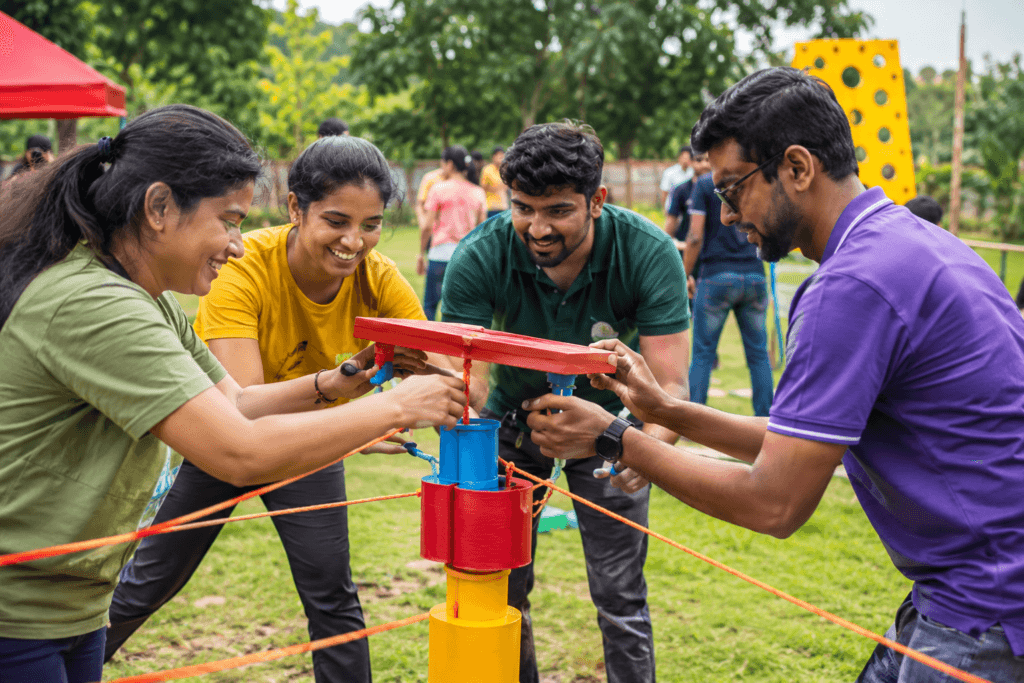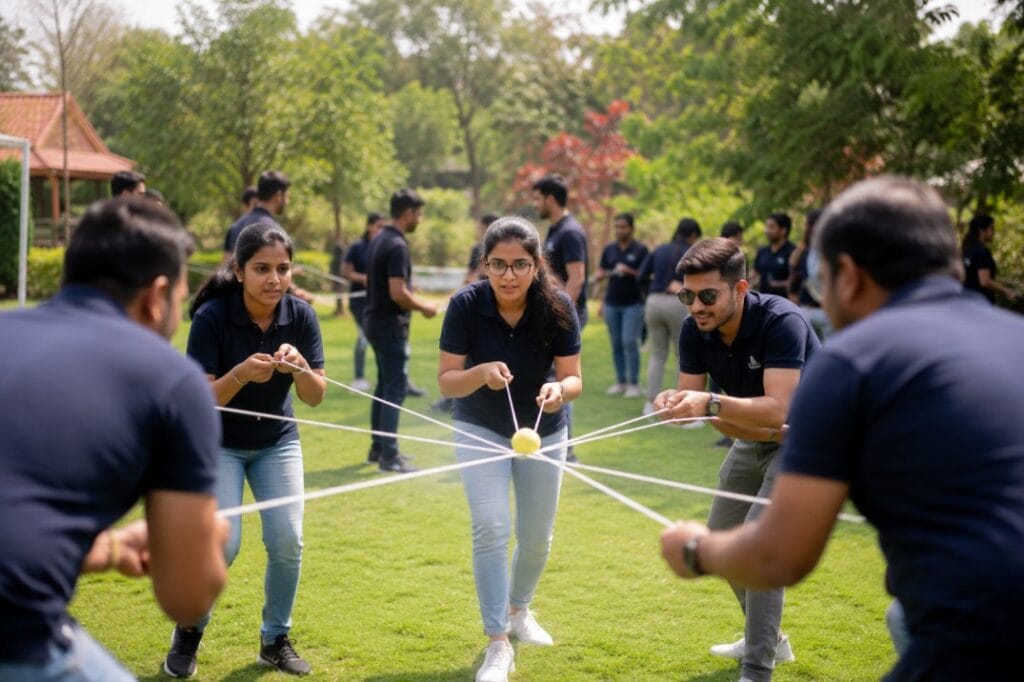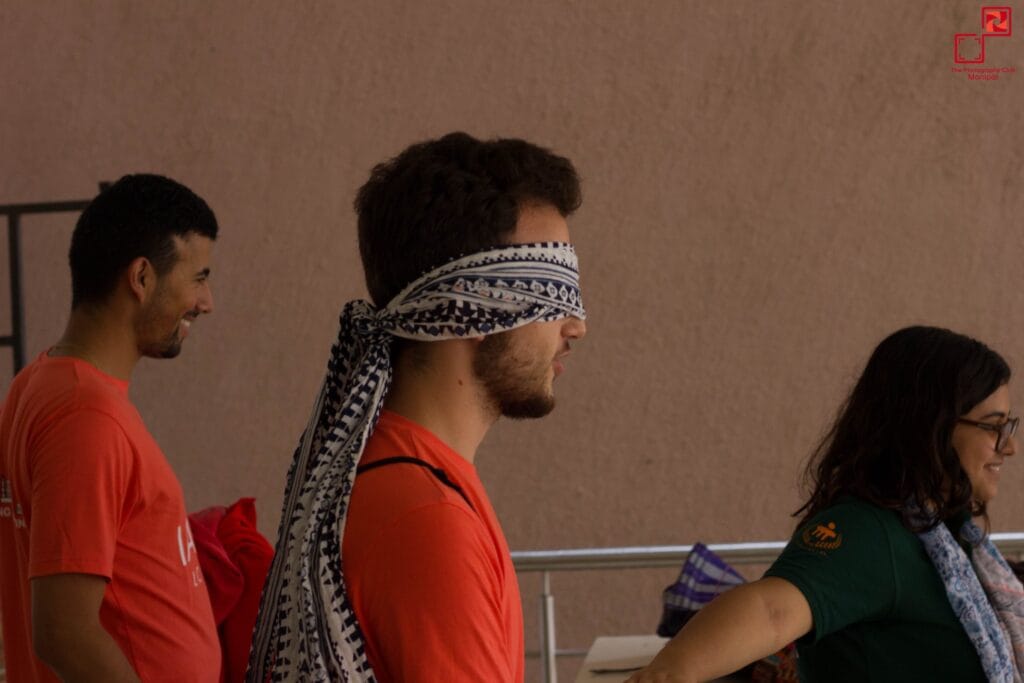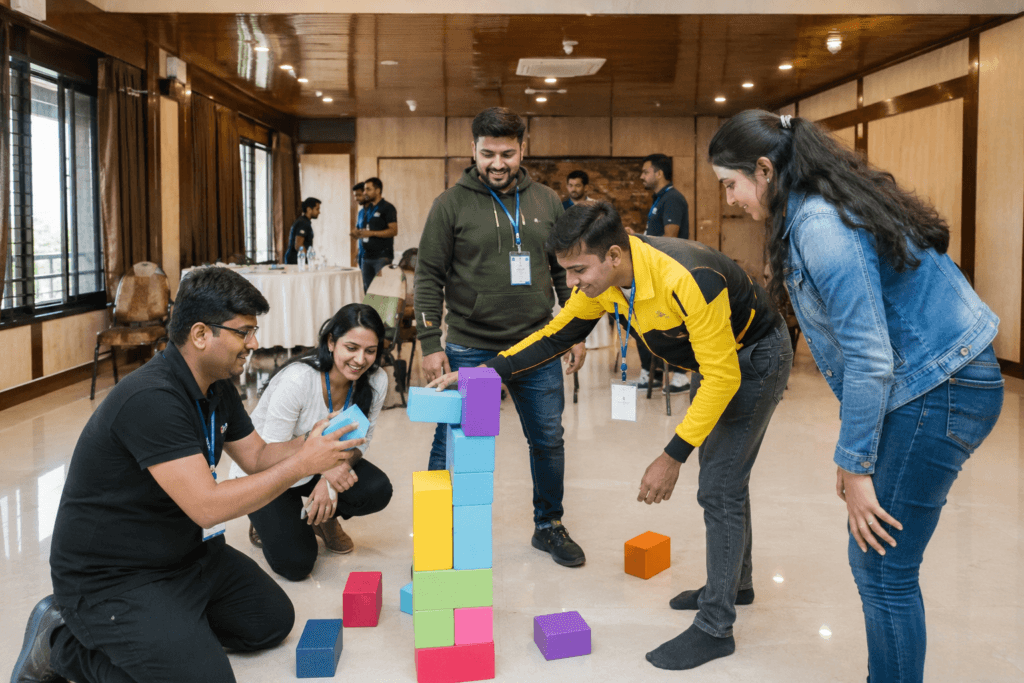
Outdoor Team Building Activities: A Complete Guide by Team Building Ninja
Introduction Walk into most offices today and you’ll see the same problem repeating itself: teams that share a Slack channel but not a working relationship. Meetings run on time, deadlines get met, and yet something is missing — trust, spontaneity, the kind of communication that only develops when people are outside their usual roles and routines. This is exactly the gap that outdoor team building activities are designed to close. Unlike a conference room icebreaker, outdoor programs put employees into real, unscripted situations — physical challenges, shared problem-solving, unfamiliar terrain — where hierarchy fades and genuine collaboration takes over. At Team Building Ninja, we’ve spent years designing outdoor team building in Pune for companies ranging from 20-person startups to enterprise teams of 500+. This guide goes deep into what actually works, why it works, and how to plan a program that delivers real business outcomes — not just a nice day out. Quick Answer: Outdoor team building activities are structured, facilitator-led experiences — such as treasure hunts, obstacle courses, adventure challenges, and problem-solving games — conducted outside the office to build communication, trust, and leadership skills among employees. They work best when paired with a debrief session that connects the experience back to real workplace behavior. Why Outdoor Team Building Works Better Than Indoor Alternatives Indoor team building has its place, but outdoor environments trigger something indoor sessions rarely do: genuine unpredictability. Weather, terrain, physical effort, and unfamiliar surroundings strip away the polished “meeting room version” of an employee and reveal how they actually communicate and problem-solve under mild pressure. Research in organizational psychology consistently points to a few outcomes that outdoor formats produce more reliably than indoor ones: This is why corporate team building budgets across Pune’s IT, manufacturing, and BFSI sectors increasingly favor outdoor formats over standard conference-room workshops. Where Outdoor Team Building Fits Into Your Corporate Calendar Corporate Retreats and Leadership Offsites Retreats are the natural home for outdoor programs because they combine strategic offsite discussions with high-impact team activities. A well-designed corporate team building day at a retreat can include morning strategy sessions followed by afternoon adventure challenges — giving leadership both the planning time and the relationship-building time they need. For senior teams specifically, our outdoor leadership challenges and activities are built to test decision-making, delegation, and accountability in a way boardroom discussions simply can’t replicate. Annual Days and Employee Engagement Events Annual celebrations are increasingly built around outdoor team building activities rather than a stage and a DJ. Treasure hunts, relay competitions, and department-vs-department challenges turn a passive celebration into an active, memorable one — and employees consistently rate these as the most engaging part of annual events. Multi-Day Adventure and Excursion Trips For companies wanting a deeper reset, 2-3 day outdoor excursions — trekking, camping, rafting — combine adventure with sustained team exposure. These formats work particularly well for teams that have been remote or hybrid and need extended in-person time to rebuild working relationships. Structured Outbound Training Programs An outbound training program goes a level deeper than a fun day out — it’s built around specific learning objectives (leadership, negotiation, communication under pressure) and includes structured debriefs that translate the outdoor experience into workplace application. This is the format most requested by HR and L&D teams for management and high-potential employee development. Reward and Recognition Programs High-performing teams increasingly get rewarded with outdoor experiences rather than standard bonuses or vouchers. It’s a format that doubles as recognition and as a retention tool — employees remember an adventure trip far longer than a cash bonus. Outdoor Team Building Activities: The Full Breakdown 1. Treasure Hunt and Amazing Race Formats Teams follow a trail of clues, complete physical and mental tasks, and race against time or other teams. These formats are exceptional for building communication and delegation skills because success depends entirely on how well the group organizes itself — not on any one person’s ability. Best for: Mixed-seniority teams, cross-department bonding, groups of 15-100 2. Obstacle Courses and Relay Races Physical, high-energy formats where teams must coordinate movement, strategy, and support to complete a shared course. These build trust quickly — employees learn to rely on teammates in a very literal, physical sense, which translates into workplace reliability. Best for: Large groups, annual day events, morale-building 3. Rope Courses and High-Element Challenges Trust falls, rope bridges, and elevated team tasks push employees slightly outside their comfort zone under controlled, safety-managed conditions. These are among the most effective outdoor leadership challenges for identifying and developing emerging leaders. Best for: Leadership offsites, management training, groups of 10-40 4. Survival and Wilderness-Based Activities Camping, fire-building, navigation tasks, and basic survival simulations force teams to plan, delegate, and problem-solve with limited resources — closely mirroring the resource-constrained decision-making employees face at work. Best for: Multi-day retreats, resilience and adaptability training 5. Problem-Solving and Strategy Games Lower-intensity, high-cognitive formats — puzzle challenges, resource-allocation simulations, and strategy games — that work well for senior teams who want the collaborative benefit of an outdoor setting without the physical intensity. Best for: Leadership teams, strategy offsites 6. Communication-Focused Exercises Blindfolded builds, silent relay tasks, and instruction-only challenges (where one teammate can see the task and must verbally guide others) directly target the #1 issue HR teams report across Pune’s corporate sector: breakdowns in cross-team communication. Best for: Newly merged teams, cross-functional groups, remote-to-office transitions 7. Team Sports and Group Competitions Structured sports tournaments — cricket, tug-of-war, football — bring natural camaraderie and healthy competition, and work particularly well as a lighter complement to more intensive activities during a full-day program. Best for: Full-day retreats, annual events, department competitions 8. CSR-Linked Outdoor Activities A growing trend among Pune-based companies: combining outdoor team building with a community or environmental project — tree plantation drives, village outreach, or clean-up initiatives — giving the day shared purpose alongside team bonding. Best for: Companies with strong CSR mandates, mission-driven teams Best Outdoor Team Building Locations Near Pune Location shapes what’s possible, so we match activity